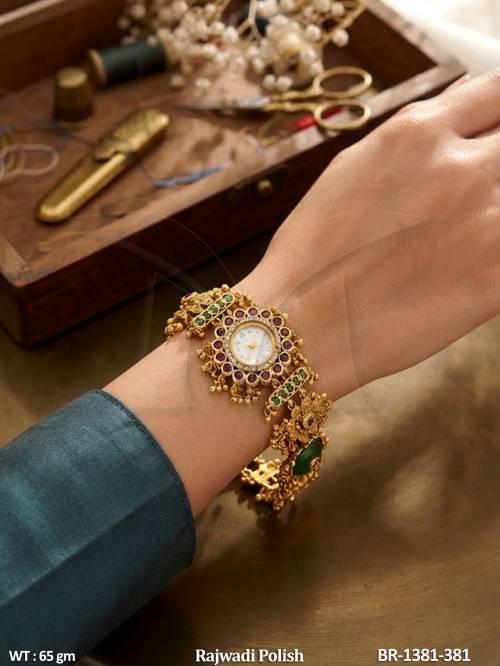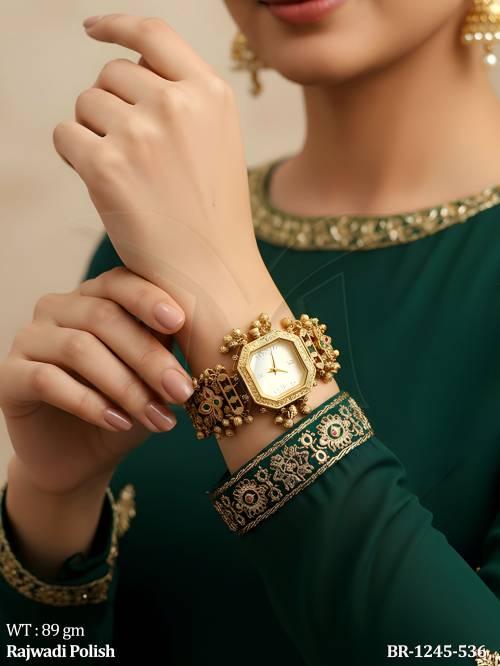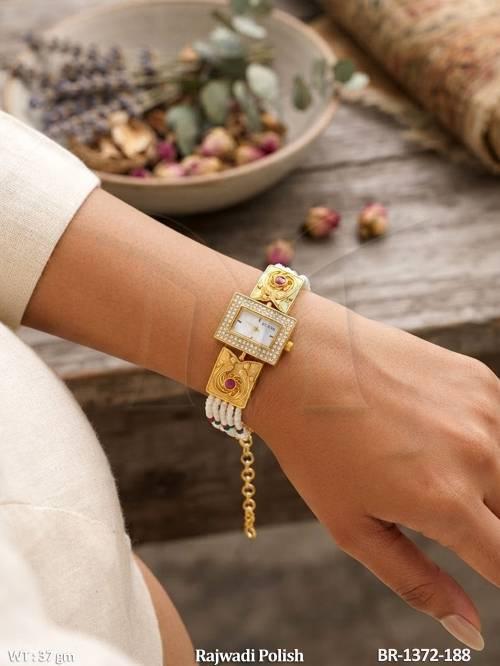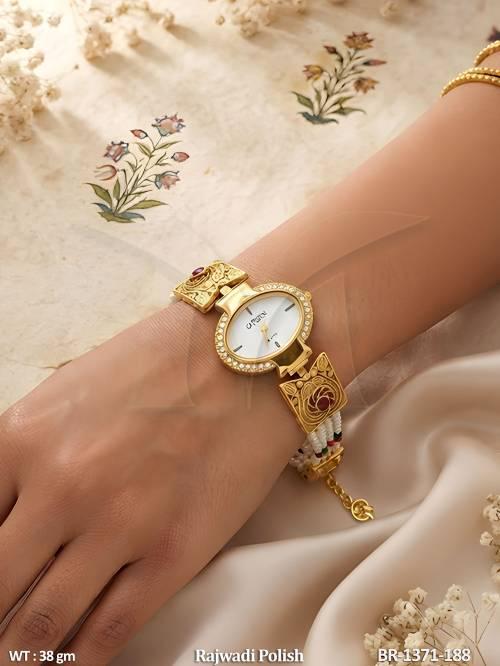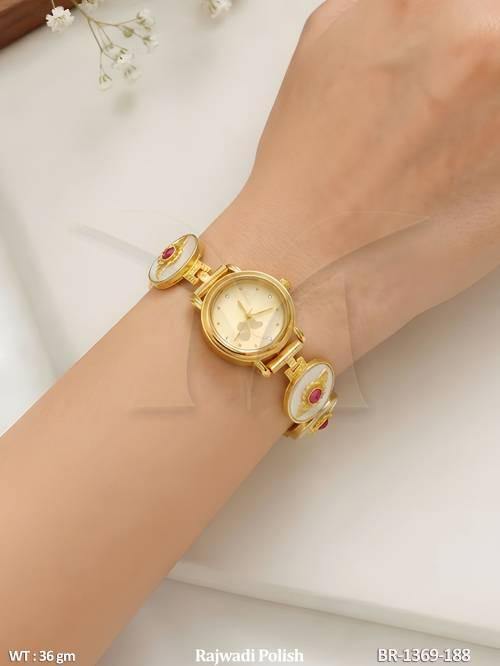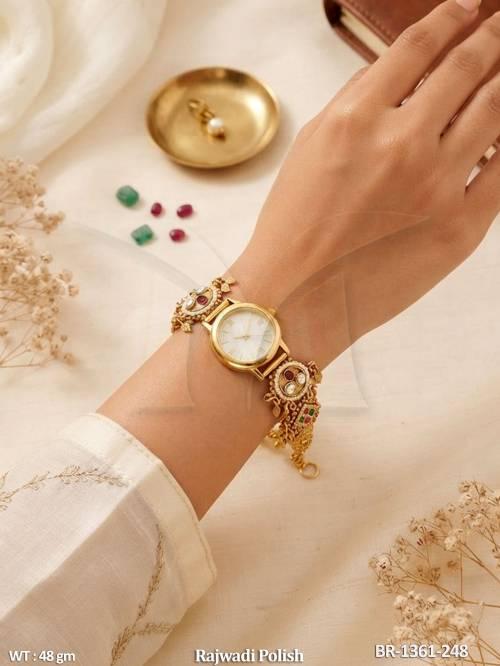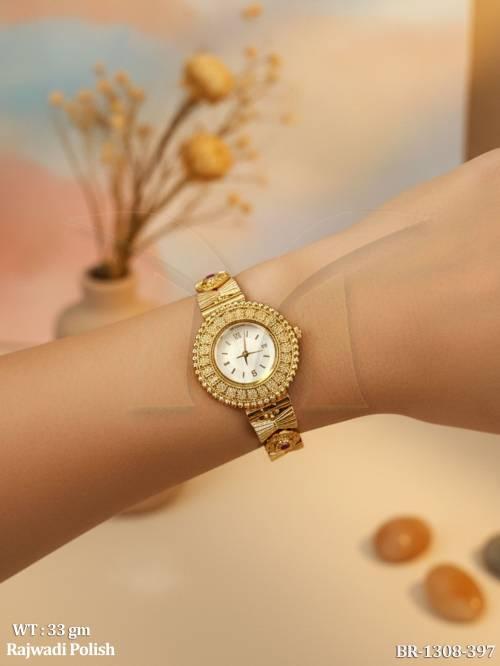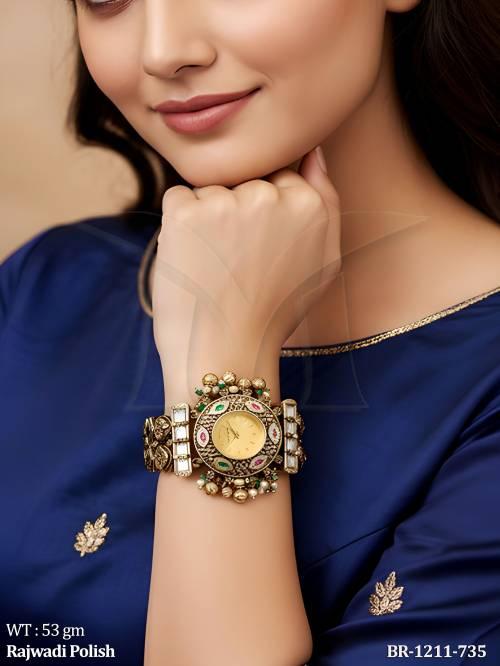
Watches in this category are imitation ladies bracelet watches finished in antique gold, Rajwadi polish, and stone-studded designs, built as fashion pieces rather than everyday timepieces. Retailers, boutique owners, and exporters buy them wholesale from Manek Ratna's Mumbai manufacturing base to stock ethnic and festive jewellery counters across India.
What does the Watches category at Manek Ratna include?
The range runs from simple antique gold fancy ladies watches through to heavier, heritage-inspired bracelet watches carrying coloured stone accents in ruby and emerald tones. Rajwadi polish pieces feature carved floral and peacock motifs on the band, giving them a royal, old-world look that suits bridal and festive counters. Alongside these sit traditional stone-studded designer bracelet watches, plain everyday antique bracelet watches, and heavier statement pieces built for party wear.
Bands are almost always the bracelet or cuff style rather than a strap, since the bracelet itself is the main design element and the dial is comparatively small. This makes the watch double as a piece of jewellery, which is why it is bought and displayed alongside bangles and kada rather than in a separate watch section.
What materials, plating and finishes distinguish this range?
The base structure is a metal alloy, plated rather than solid gold or silver, which keeps the look premium while keeping the piece wearable as costume jewellery. Two plating families dominate the category: bright gold plating, which gives a shinier, more contemporary look, and antique gold or oxidised plating, which gives a duller, heritage tone that reads as traditional.
Rajwadi polish sits within the antique family but goes further, combining an antiqued gold tone with carved or embossed surface detail rather than a flat plate. In practice, this textured surface hides small scuffs and handling marks better than a smooth bright-gold plate, which is one reason Rajwadi pieces tend to photograph and display well even after some counter handling. Oxidised silver-tone finishes appear on a smaller share of the range and generally suit buyers stocking a more contemporary or fusion-wear look alongside the traditional gold pieces.
Stones across the range are largely kundan-style or coloured glass and crystal stones set to resemble ruby, emerald or polki work rather than genuine gemstones. Setting methods vary between glued stones on simpler pieces and claw or prong settings on the more detailed heritage designs, and this difference matters directly for durability, which is covered in the inspection section below.
Who buys these watches, and which occasions drive demand?
The end customer is typically a woman buying ethnic or fusion wear for herself, or a family member buying a bracelet watch as a gift, most often for a mother, mother-in-law, sister or friend around a wedding or festival. Retail contexts include ethnic wear boutiques, wedding shopping stores, general fashion jewellery counters, online resellers, and export buyers serving Indian diaspora markets abroad.
Demand for heavier, stone-studded heritage pieces peaks around the wedding season and major festivals such as Diwali and Navratri, when buyers are looking for a statement accessory to match festive or bridal outfits. Simpler antique gold and Rajwadi bracelet watches sell more steadily through the year, since they double as everyday ethnic accessories and gifting items outside the peak wedding and festival windows.
How should a retailer plan the assortment mix?
Simpler antique gold and Rajwadi bracelet watches are generally worth stocking deep, since they sell across a wider range of occasions, price points and customer ages, and they restock predictably. Heavily stone-studded heritage pieces with ruby and emerald accents work better as a shallower, higher-ticket range that anchors a premium display rather than a fast-moving everyday line.
- Keep floral and peacock motif Rajwadi designs rotating alongside festive and wedding-season stock rather than displaying the same design year-round.
- Treat plain traditional bracelet watches as a steady, repeat-selling base that supports footfall between festival peaks.
- Use stone-studded and ruby-emerald accented pieces to anchor a premium counter or window display, even if they move more slowly than simpler designs.
Restocking is best aligned with the wedding and festival calendar rather than a fixed monthly cycle, since a large share of demand concentrates around those windows. For exact order structure, quantities and current terms, buyers should contact the Manek Ratna sales team directly rather than plan around assumptions.
What should a buyer inspect before placing an order?
- Clasp and buckle action, checking that it opens and closes smoothly without catching on the band.
- Plating uniformity across the full bracelet, not just the visible face of the dial.
- Colour consistency of the antique or Rajwadi finish across a full batch, since shade drift between pieces is more noticeable in bracelet-style watches than in smaller jewellery items.
- Setting security on stone-studded pieces, distinguishing glued stones from claw-set stones, since the two behave differently with regular wear.
- Weight and flex of the bracelet links, which affects both comfort and perceived quality on the retail floor.
- Dial legibility and hand alignment, confirming the quartz movement is ticking correctly before the piece goes on display.
What distinguishes Manek Ratna's manufacturing on this line?
Manek Ratna manufactures this range from its Mumbai base, which allows plating and stone-setting quality to be checked in-house rather than across multiple outsourced units. The range breadth, from plain antique bracelet watches to detailed Rajwadi and stone-studded heritage designs, is built to let a single retailer source both fast-moving everyday stock and slower, higher-ticket display pieces from one supplier.
Consistency across repeat batches matters particularly in this category, since bracelet watches are often displayed and sold in pairs or small matching sets, and visible finish drift between batches is more noticeable here than in single-piece jewellery items. Retailers restocking a proven design benefit from being able to match earlier orders closely rather than receiving a visibly different antique tone or stone colour on a repeat order.
Frequently asked questions
What is the difference between Rajwadi polish and antique gold finish?
Rajwadi polish is a heavier, textured antique-style finish linked to Rajasthani royal jewellery, often carved with motifs like peacocks or florals under an oxidised gold tone. Antique gold finish is a smoother plated antique-look coating. Rajwadi work generally hides surface wear better than a plain antique gold plate, which suits statement bracelet watches, while bright gold plating is shinier but shows wear faster than either antique option.
Are these watches waterproof?
No, these are fashion bracelet watches meant for occasional and party wear rather than daily water exposure. The plating, stone settings and bands are not built for swimming or heavy water contact, so retailers should position them as ethnic and festive accessories rather than daily-wear timepieces. Advising customers to remove the watch before washing hands or bathing helps preserve the finish over time.
Do the bracelet watches include a working movement?
Yes, each piece carries a functioning quartz movement, so it tells time in addition to working as a fashion accessory. The mechanism is a standard imported quartz movement rather than a premium branded one, since the value in this category sits in the finish, stonework and design rather than horological features. Buyers should check hand alignment and that the movement is running before dispatch.
Which styles sell fastest for ethnic wear retailers?
Antique gold and Rajwadi bracelet watches in simpler floral or plain textured designs tend to sell through fastest, since they suit everyday ethnic wear as well as gifting. Heavily stone-studded heritage pieces with ruby and emerald accents move slower but support higher price points and anchor a premium display. A mix weighted toward simpler antique and Rajwadi styles, with a smaller share of stone-studded pieces, works well for most counters.
Can the stones or colours be customised for an order?
Customisation depends on the design and current production run, so it is best discussed directly with the sales team. Some Rajwadi and stone-studded designs allow variation in stone colour or plating tone when ordered as part of a dedicated batch, while standard catalogue pieces are supplied as listed. Buyers with specific colour or finish requirements should raise them before confirming an order.
What is the minimum order quantity for this category?
Order quantities and terms depend on the specific design and current production schedule, so they are best confirmed directly with the Manek Ratna sales team rather than assumed from the catalogue. Terms can vary between simpler antique bracelet watches and more detailed stone-studded pieces. Buyers planning a first order should contact sales for current quantities, structure and lead times before finalising a selection.
How can I tell if the plating will hold up in humid or coastal markets?
Antique gold, oxidised and Rajwadi finishes generally hold their look longer in humid conditions than bright gold plating, since the textured or antiqued surface shows minor dulling less visibly. Checking a sample piece after light handling, and asking whether the plating is a thicker antique coat rather than a thin bright layer, gives a practical indication before committing to a large repeat order for coastal or high-humidity markets.