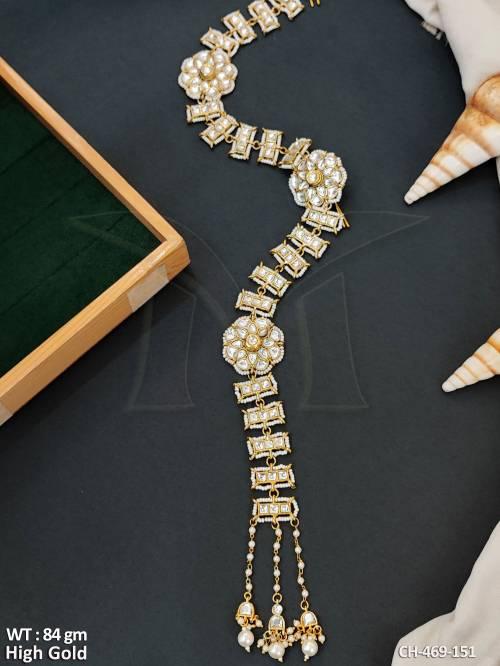
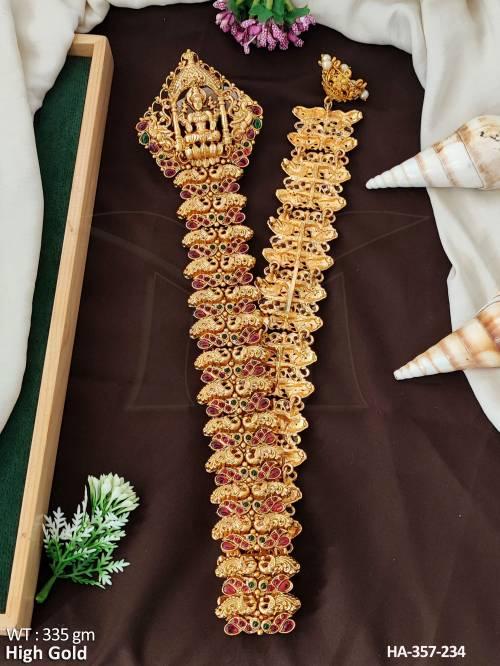
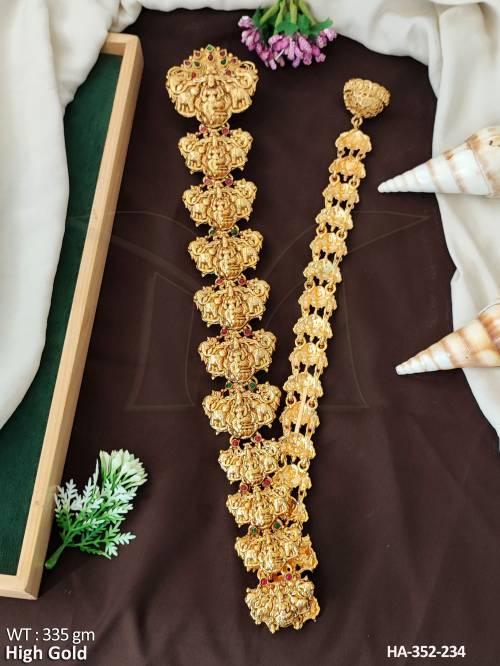
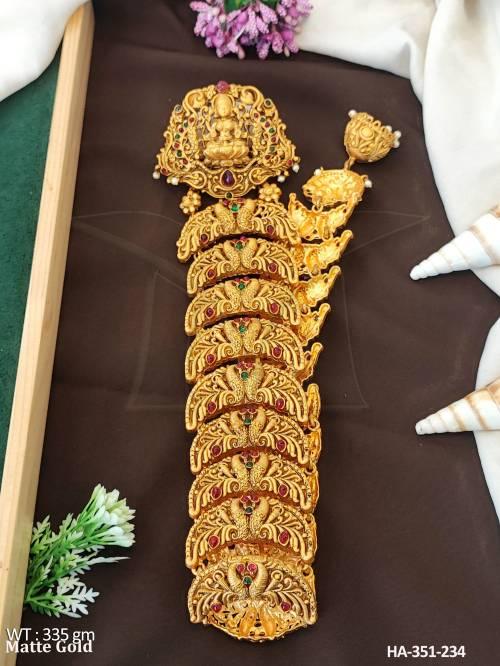
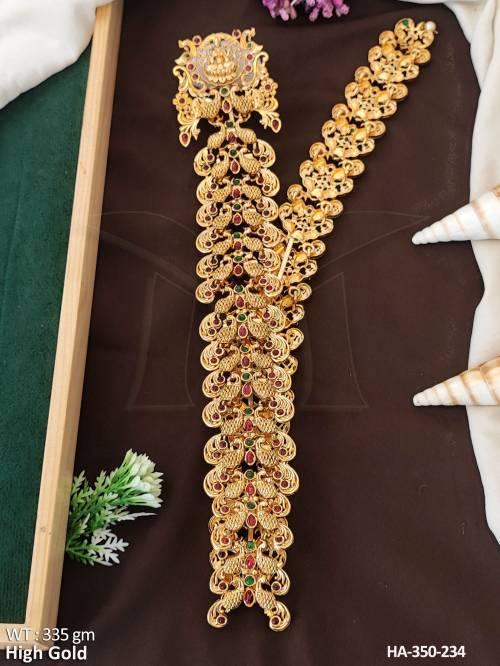
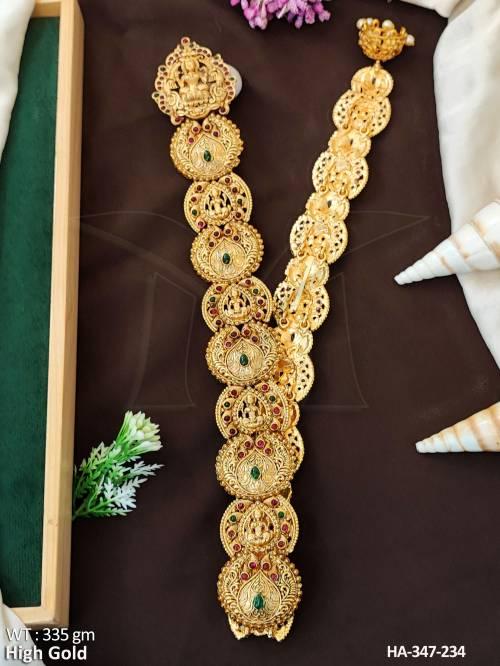
Choti covers imitation hair jewellery made to dress a plait or braid, produced in temple design, kundan and full stone finishes with high gold polish and antique plating. It is supplied wholesale from Mumbai to bridal boutiques, saree retailers and exporters who stock it alongside other imitation jewellery to complete a bridal or festive look.
What does the Choti category include for a wholesale buyer?
Choti, sometimes called jada or hair jewellery in trade listings, refers to ornamental pieces designed to sit along a plait or braid rather than to be worn as a standalone accessory. Within the category, the main split is by design language: temple design pieces draw on South Indian temple carvings and are usually dense with stone work, while fancy or designer styles take a more contemporary, lighter approach suited to everyday party wear.
A second split runs by length and occasion. Bridal pieces tend to run long, covering most of the plait with continuous stone or kundan work, and are positioned as a statement piece for wedding day wear. Shorter party wear and fancy style pieces cover only the upper section of the braid and are priced and positioned for more frequent, casual purchase.
Buyers comparing catalogues should expect to see the same base design repeated across a few finish variants, most commonly high gold polish, antique gold polish, and a kundan or full stone stone-work option. This lets a retailer offer one silhouette across a spread of price points and occasions without holding an entirely separate design for each.
What materials, plating and stone work define this range?
Base construction across this category is cast or stamped metal alloy, plated rather than solid, which is standard practice for imitation jewellery and keeps the finished piece light enough to pin securely into hair without pulling. Plating quality is where finishes genuinely differ in day-to-day use.
- High gold polish uses a heavier plating layer than a standard gold wash, giving a brighter, more saturated colour that holds up better through a full day of wear, though it still needs dry storage between uses.
- Antique gold polish is treated to look deliberately aged, with darker recesses and a matte-to-satin surface. This finish shows less visible wear over time because the tone is already uneven by design, which makes it a practical choice for markets with humid or coastal climates.
- Kundan work uses flat-set glass stones in a traditional foiled setting, associated with North Indian bridal styling and typically used on longer, more elaborate pieces.
- Full stone setting covers the visible face of the piece edge to edge, leaving little plain metal exposed, and is the densest and most photogenic option, generally reserved for bridal and stage pieces rather than everyday designs.
Stone work itself is glass or synthetic stone rather than natural gemstone, set by hand or machine depending on the design's complexity. The security of that setting, not the brilliance of the stone, is the detail that determines whether a piece survives repeated handling on a shop floor.
Who buys hair choti and when does demand peak?
The largest end customer is the bride and her immediate bridal party, who buy choti to complete a full jewellery set for the wedding day itself, usually alongside a matching necklace, earrings and maang tikka. Saree and lehenga boutiques stock choti primarily as an add-on sale rather than a destination purchase, offered at the point a customer is already buying a full outfit.
A second, steadier customer base is the classical dance and stage performance market. Temple design pieces in particular are worn repeatedly rather than once, so performers and dance schools tend to reorder more predictably than bridal customers, which makes this segment useful for evening out seasonal swings.
Demand follows the Indian wedding calendar closely, with the strongest pull typically running from October through February, and a secondary rise around major festivals such as Navratri and Diwali when party wear and fancy style pieces move faster than bridal designs. Retailers serving diaspora or export markets should also track the wedding season of the destination country, which does not always line up with the Indian calendar.
How should a retailer build a Choti assortment?
Temple design pieces in high gold polish with full stone work are generally the safest core to stock in depth, since they serve both the bridal and dance performance customer and carry over from season to season rather than going out of fashion quickly. Fancy and designer style pieces in lighter stone work suit a broader, shallower spread, since they are bought more casually and turn over on trend rather than occasion.
Longer bridal kundan pieces are worth carrying but in narrower depth. They carry a higher ticket price and a more specific customer, so a wide but shallow spread across two or three design variants usually outperforms committing heavily to one.
- Stock deep: temple design, high gold polish, full stone finishes that cross bridal and dance markets.
- Stock moderate: antique finish designer pieces for humid-climate or coastal customers.
- Stock shallow but present: long bridal kundan pieces for the higher-ticket, occasion-specific customer.
Restocking rhythm should be timed ahead of the wedding season build-up rather than during it, since boutiques placing orders once the season has started are competing with every other retailer for the same production slots. A second, smaller restock ahead of the festival period covers the fancy and party wear side of the range.
What should a buyer inspect before a wholesale order?
Plating consistency across a batch is the first thing worth checking, since variation in gold tone between pieces from the same design is the most common visible defect in imitation hair jewellery. Hold a few samples from the same style together in natural light rather than checking them one at a time under shop lighting.
Stone setting security matters more than stone brilliance. Press gently along the edge of the stone work on a sample piece; loose stones or visible gaps at this stage will only get worse once the piece is handled repeatedly on display or tried on by customers.
Check the fitting or pin mechanism that attaches the piece to the hair. A choti that looks correct on a stand can still be impractical if the attachment is too rigid or too loose to sit securely through a full day of wear, which is the kind of complaint that generates returns rather than repeat business.
What distinguishes Manek Ratna's Choti manufacturing in Mumbai?
Manek Ratna manufactures this category from its own production base in Mumbai rather than sourcing it through intermediaries, which gives closer control over plating thickness and stone setting consistency across repeat orders. For a retailer, that consistency matters more than any single design, since it means a reorder six months later still matches the finish the customer bought the first time.
The range spans temple design, kundan, antique and fancy style choti within the same production line, which lets a retailer or exporter source a full spread of bridal, festive and everyday designs from one supplier rather than assembling a catalogue from several. For current availability, order structure and terms, contact the Manek Ratna sales team directly.
Frequently asked questions
What is the difference between temple design and kundan choti?
Temple design choti takes its motifs from South Indian temple carvings, usually finished in high gold polish with dense stone setting for a solid, sculptural look. Kundan choti uses flat-set glass stones in a lighter, more intricate pattern associated with North Indian bridal wear. Retailers serving South Indian customers or classical dance markets typically lean temple design, while bridal-focused stores across the north stock more kundan.
What does full stone mean in a choti listing?
Full stone means the visible surface of the piece is covered edge to edge in stone work, with little or no plain metal showing through. It gives a denser, more photogenic sparkle and is the finish most requested for bridal and stage wear, though it costs more to produce than pieces with partial stone coverage and open metal work.
Does high gold polish plating fade or tarnish over time?
High gold polish is a thicker plating layer than standard gold tone, so it holds its colour longer under normal wear and occasional contact with sweat or humidity. It will still dull faster than real gold with repeated exposure to perfume, hairspray or damp storage, so retailers should advise customers to store pieces in a dry pouch between uses.
Who buys hair choti at retail, is it only bridal customers?
Bridal customers are the largest single segment, but the category also moves through festive and party wear, and through classical dance and stage performance buyers who need temple-style pieces regularly rather than once. Saree and lehenga boutiques often sell choti as an add-on alongside jewellery sets rather than as a standalone purchase.
Which finish should a retailer stock for humid or coastal markets?
Antique and oxidised-style finishes generally hold their appearance longer than bright gold polish in humid coastal conditions, because the darker base tone shows less visible wear. Retailers in coastal cities often keep antique and temple design pieces as the deeper stock, with bright high gold polish kept for markets with drier climates or shorter wear cycles.
Can Manek Ratna supply hair choti for export markets outside India?
Yes, the range is supplied to exporters and overseas buyers as well as domestic retailers, since the designs travel well to diaspora bridal and festive markets. Packing and documentation requirements vary by destination, so exporters should raise their specific market and compliance needs directly with the sales team before confirming an order.
What are the minimum order quantities and payment terms for this category?
These details are handled directly by the sales team and are confirmed at the time of enquiry rather than published on the category page, since terms are reviewed regularly. Contact Manek Ratna's sales team for current order structure, payment terms and any other commercial specifics before placing a wholesale order.