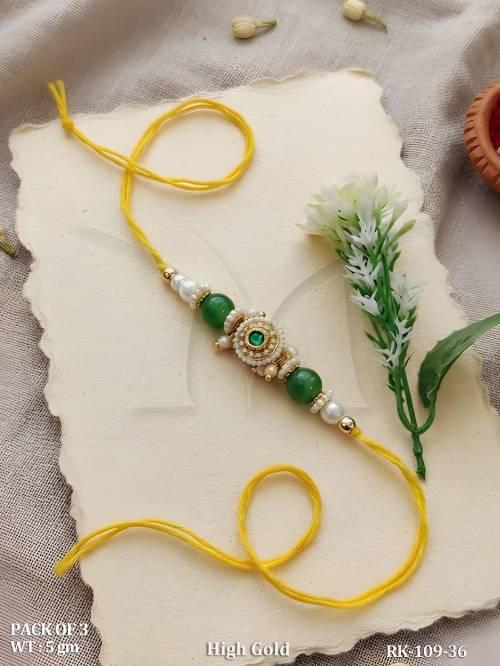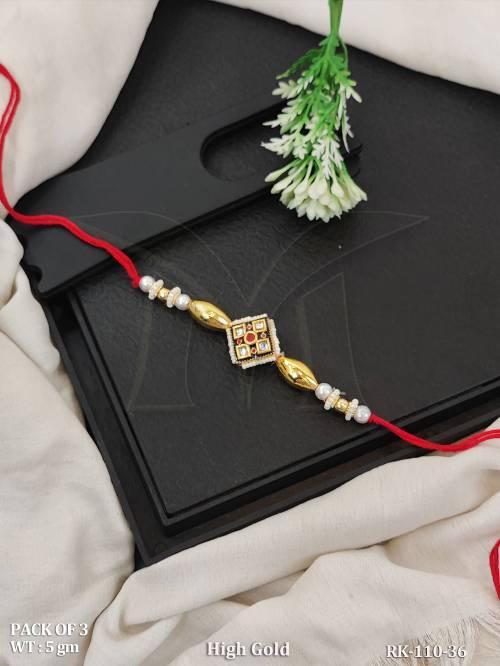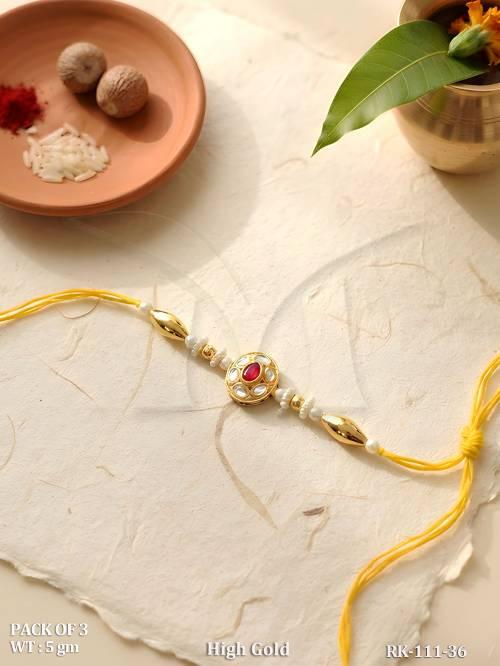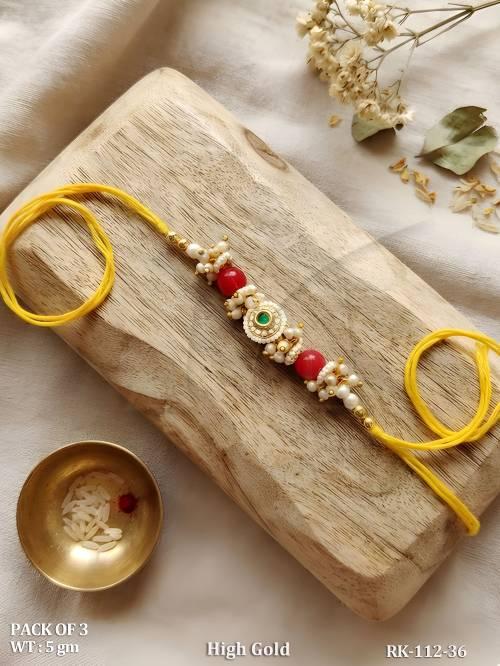
Rakhi is Manek Ratna's range of Raksha Bandhan wristbands, supplied wholesale to retailers, boutiques, gift shops and exporters across India. The category runs from traditional gold-finish threads to pearl, stone and cartoon-character designs, built for the annual festival rush rather than everyday wear.
What does the Rakhi category cover?
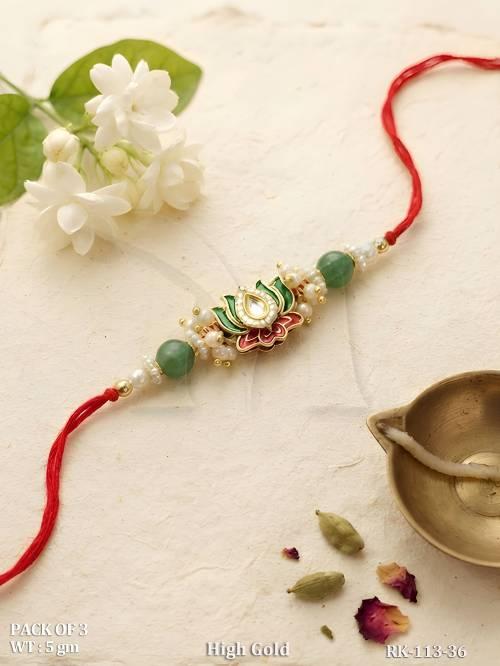
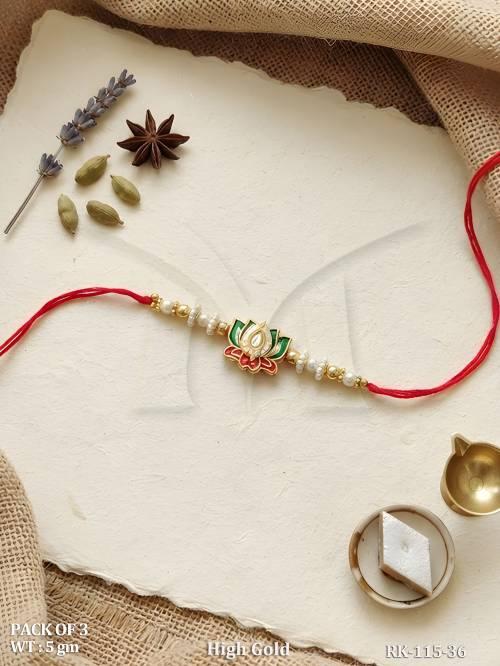
The range spans religious motifs such as Om and Ganesha rakhi, gift-pack sets meant for multiple brothers, single statement pieces like the evil eye pearl design, and cartoon-character rakhi aimed at children. Traditional gold-finish threads sit alongside designer pieces built around lotus motifs, pearl beading and stone work, so a single order can cover a full customer spread from a young nephew to an older brother expecting a formal piece.
Most designs are supplied as combo or multi-piece packs rather than single units, which suits how rakhi is actually bought at retail: a sister buying for two or three brothers, or a shop bundling a rakhi with sweets and a card for a gift set.
What materials, finishes and stones go into this range?
The base structure is imitation metal - brass or a similar alloy - dressed in one of two broad finish families. High gold plating gives a bright, reflective festive shine that photographs well for online listings, while antique gold and oxidised finishes carry a deliberately aged, textured look that reads as more traditional and resists showing surface wear as quickly as bright plating does.
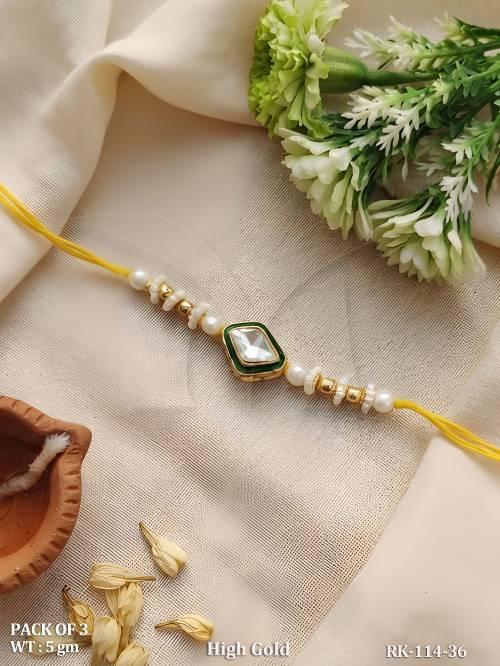
Embellishment sits on top of this base: shell or glass pearls, kundan-style set stones, lotus-cut stones and beadwork. Pearl and stone work is concentrated in the premium designer combo packs, while plain metal and enamel work covers the everyday and children's designs. The thread or dori - the actual wrist band - is a separate component from the ornament and is worth checking on its own, since it carries the load when the rakhi is tied and worn through a full day of family visits.
Who buys rakhi wholesale, and when does demand peak?
The end buyer is almost always a woman shopping for one or more brothers, either in person at a local jewellery or gift counter or through an online store. Retail customers range from schoolgirls choosing a cartoon design to adult women selecting a formal gold-finish or stone-set piece for an older brother, which is why a workable stock list needs both ends represented.
Demand is tied to a single fixed point on the calendar - Raksha Bandhan, observed on the full moon of the Hindu month of Shravan, which falls in August most years. Nearly all sell-through happens in the weeks immediately before the festival, with interest building through July and tapering sharply within a day or two of the date itself. This makes rakhi one of the more predictable seasonal categories to plan for, even though the buying window itself is short.
How should a retailer build a rakhi assortment for Raksha Bandhan?
A workable assortment usually leans on three tiers:
- Everyday traditional - gold-finish single rakhi and basic combo packs, which carry the broadest appeal and the fastest sell-through, so these are worth stocking deepest.
- Designer and gifting - pearl, stone and lotus-motif combo packs, bought by customers who want to give something that looks considered rather than routine. These move well but at a slower rate than the everyday tier.
- Children's and novelty - cartoon-character and evil-eye designs, which sell reliably but to a narrower age group and can go out of style faster than traditional designs, so shallower stock reduces the risk of unsold pieces after the festival passes.
Because the entire category sells against one date, rakhi is generally bought once for the season rather than restocked gradually through the year. A retailer who sees a design selling through early in the run-up has little room to reorder and receive fresh stock before demand ends, so getting the initial mix right matters more here than in categories with a longer selling window.
What should a buyer inspect before placing a rakhi order?
Plating evenness across every piece in a pack is the first check - a combo set where one rakhi has visibly thinner or patchier gold coating undermines the whole pack when it reaches a retail shelf. Stone and pearl settings should be checked for secure fixing rather than glued placements that can lift with normal handling.
The dori itself deserves attention independent of the ornament: it should be tied firmly, sit flat, and hold its knot without fraying, since this is the part that is physically worn. Buyers should also check that a stated pack is uniform in finish and colour tone across all pieces, since mismatched shades within one combo are one of the more common quality complaints in this category.
What distinguishes Manek Ratna's rakhi production?
Manek Ratna manufactures this range from its Mumbai base, which keeps plating, stone-setting and pack assembly under one production process rather than pieced together from multiple outside sources. This matters most in the combo packs, where colour and finish consistency across pieces depends on all of them coming from the same plating batch.
Because the line is manufactured rather than sourced piecemeal, buyers working with Manek Ratna deal directly with the production source for this category, which shortens the chain between a stocking decision and getting a matching, consistent set of pieces onto the shelf.
Frequently Asked Questions
What is the difference between antique gold and high gold rakhi finishes?
High gold plating gives a bright, reflective shine suited to festive photography and counter display, while antique gold and oxidised finishes carry a deliberately textured, aged look. Antique finishes tend to show minor handling marks less obviously than bright high-gold plating, which is one reason they are common in the designer and traditional-gift tiers of this category.
What materials are used for the pearls and stones on rakhi?
The pearls used across this range are shell or glass pearls rather than natural or cultured pearls, and the stones are cut imitation stones set in kundan-style or lotus-motif mounts. Both are chosen for consistent size, colour and finish across a production batch, which matters more in this category than in fine jewellery because rakhi is typically sold and worn as part of a matched pack.
Which rakhi styles sell fastest during the Raksha Bandhan season?
Traditional gold-finish rakhi and basic combo packs generally sell through fastest because they suit the broadest range of ages and budgets. Designer pieces with pearl or stone work sell more slowly but at a steadier rate through the season, while children's cartoon-character designs sell quickly within their specific age group but have a narrower overall customer base.
Do rakhi designs change every year, or do classic styles repeat?
Traditional gold-finish and religious-motif designs such as Om and Ganesha rakhi repeat year on year with only minor variation, since they serve a customer who wants a familiar, recognisable style. Designer combo packs and children's cartoon-character rakhi change more often, reflecting seasonal trends and licensing shifts in a way the traditional tier does not.
Can rakhi be bought in mixed designs within a single pack?
Yes, a number of the combo and multi-piece packs in this category mix related designs or finishes within one set, such as a pack combining a Ganesha motif with a plain gold-finish thread. This suits sisters buying for more than one brother and shops that prefer to display a ready-made variety rather than assembling mixed sets themselves.
What should I check for quality before stocking a rakhi line?
Check plating evenness across every piece in a pack, secure setting of stones and pearls rather than loose or glued placements, and consistent colour tone within a combo set. The dori should hold its knot firmly and sit flat against the wrist, since a rakhi that unravels during a full day of family visits reflects on both the design and the seller.
What is the minimum order quantity for wholesale rakhi?
Order quantities and current commercial terms are handled directly by the Manek Ratna sales team, since these can vary by design and season. Buyers should get in touch with sales for up-to-date terms before planning a rakhi order.