
• Search

  • Login

FILTERS

antique nath

  1. Home
  2. ANTIQUE NATH
    Sort by : What's New
    antique nath
    1. Home
    2. ANTIQUE NATH
    Showing 25–36 of 120 products
    high-gold-antique-designer-nose-ring-nath-with-chain
    High Gold Antique Designer Nos...
    Add To Watchlist
    Play Video
    premium-antique-finish-pearl-drop-nath-jewelry
    Premium Antique Finish Pearl D...
    Add To Watchlist
    traditional-temple-style-fancy-nath-nose-ring
    Traditional Temple Style Fancy...
    Add To Watchlist
    antique-designer-nath-for-women
    Antique Designer Nath for Wome...
    Add To Watchlist
    antique-floral-design-nath-in-high-gold-finish
    Antique Floral Design Nath in ...
    Add To Watchlist
    antique-designer-nath-in-high-gold-finish
    Antique Designer Nath in High ...
    Add To Watchlist
    high-gold-traditional-flower-nath-nose-ring
    High Gold Traditional Flower N...
    Add To Watchlist
    designer-antique-full-stone-nath-for-women
    Designer Antique Full Stone Na...
    Add To Watchlist
    traditional-stone-studded-nose-ring
    Traditional Stone Studded Nose...
    Add To Watchlist
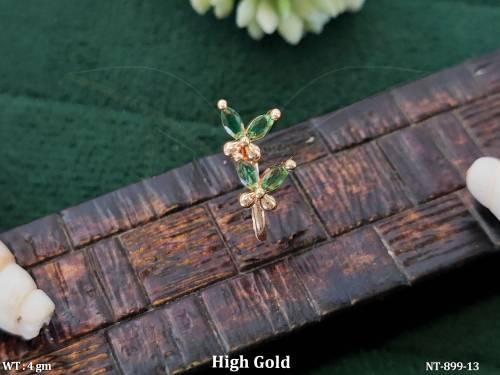
    dual-floral-stone-traditional-nose-ring
    Dual Floral Stone Traditional ...
    Add To Watchlist
    antique-designer-high-gold-polish-fancy-style-nath-
    Antique Designer High Gold Pol...
    Add To Watchlist
    beautiful-high-gold-fancy-designer-nath-
    Beautiful High Gold Fancy Desi...
    Add To Watchlist
    Antique Nath covers imitation nose rings and nose pins in antique gold and oxidised silver finishes, supplied wholesale from Manek Ratna's manufacturing base in Mumbai. The range is built for retailers, boutique owners, and exporters who need consistent quality across traditional, bridal, and daily-wear styles without the price exposure of precious metal stock.

    What does the Antique Nath range actually include?

    The category spans a full spectrum of nose jewellery designed for the Indian market, from large statement bridal naths to compact daily-wear nose pins. Within that span, buyers will find several distinct design families that address different retail customers and occasions.

    • Full stone-set naths in antique gold: heavily ornamented pieces with dense stone coverage across the ring face, intended for bridal and semi-bridal use. These are the category's highest visual-impact items and the ones most likely to be displayed as hero stock.
    • Floral motif naths with pearl drops: traditional circular designs with etched or embossed floral patterning and one or more hanging pearl or bead drops. Pearl drops add movement and a softness that appeals to customers who want traditional styling without the weight of a full stone piece.
    • Geometric stone designer naths: angular or symmetrical stone arrangements that read as more contemporary than floral styles. These attract younger buyers and urban boutique customers who want occasion jewellery with a cleaner line.
    • Temple style naths: designs drawing on South Indian temple jewellery vocabulary - deity motifs, stepped borders, and deep antique gold finish. These are an essential stocking item for retailers serving Tamil, Telugu, and Kannada-speaking communities.
    • Butterfly and novelty motifs: stone-set nose rings shaped around butterfly or other decorative forms. These perform particularly well in fashion-forward boutiques and among younger buyers looking for something beyond the standard round ring.
    • Oxidised silver designer naths and nose pins: pieces finished in a blackened silver tone, ranging from ornate party-wear styles to simpler daily-wear pins. The oxidised finish gives these a distinctly different retail identity from the antique gold line and opens the range to customers who prefer silver-toned jewellery.

    How do antique gold and oxidised silver finishes differ in practice for retailers?

    The two finishes in this category are not simply colour variants - they behave differently across retail channels, customer demographics, and seasonal windows, and a well-planned assortment treats them as distinct product lines.

    Antique gold finish is produced by applying a warm brass-toned plating and then using a controlled darkening treatment to create the characteristic aged appearance. The finish sits in surface depressions and recesses, which throws the raised design detail into relief and gives even modestly priced pieces a handcrafted, traditional look. This finish has the strongest association with bridal and festival jewellery in the North and Central Indian retail market, and it is the finish that drives the sharpest seasonal demand spikes.

    Oxidised silver finish works through a similar logic - deliberate surface darkening that highlights engraved or embossed detail - but the silver base tone positions these pieces differently. Younger buyers, fusion-styling customers, and those who regularly shop for silver-toned accessories respond to oxidised naths as everyday-wear items rather than exclusively occasion jewellery. For a retailer, this means oxidised styles carry lower seasonal risk and sustain more even sell-through across the calendar year.

    Antique polish in either tone also holds up better than bright plating in humid coastal retail environments, which is a practical argument for stocking this category in preference to high-gloss alternatives for retailers operating in coastal cities or exporting to humid markets.

    Who buys antique naths at retail, and when?

    The end retail customer for antique naths is broad enough that a single category can serve multiple distinct buyer segments within one store. Understanding who these customers are helps a trade buyer allocate floor space and depth of stock correctly.

    Bridal and semi-bridal buyers are the highest-value segment. A nath is among the most culturally significant pieces of bridal jewellery in many Indian communities, and imitation antique gold naths allow brides to match the look of heirloom pieces at a fraction of the cost. Retailers who serve bridal customers need large statement pieces with full stone settings or elaborate pearl drops, displayed prominently from September onwards through the main wedding season.

    Festival shoppers represent the widest seasonal spike. Navratri, Diwali, Teej, and Karva Chauth all drive significant foot traffic for traditional jewellery, and naths are among the items customers buy specifically for these occasions rather than from general wardrobe impulse. Stocking a full size and finish range in the four to six weeks before each major festival window is standard practice for retailers who carry this category.

    Daily-wear and younger buyers are the segment that sustains the category through quieter periods. Oxidised silver nose pins and smaller antique naths with simple floral or geometric patterns sell to this group throughout the year. These buyers are often fashion-conscious, responsive to fresh motifs, and willing to own multiple styles - which makes range breadth rather than depth the right approach for this segment.

    Exporters and diaspora-market retailers are a growing trade channel for antique naths. Indian communities in the Gulf, the UK, the US, and South-East Asia sustain strong demand for traditional jewellery that is difficult to source locally. For exporters, the antique and oxidised categories travel well because the finish vocabulary is recognisable to diaspora buyers and the imitation price point clears customs duties more cleanly than precious metal equivalents.

    How should a buyer plan the assortment mix and restocking rhythm?

    Getting the assortment balance right is more consequential than absolute stock depth. A nath range that covers all three finish and style groups - antique gold statement, antique gold daily, and oxidised silver - will outperform a deeper but narrower buy in most retail formats.

    Stock deep on:

    • Floral motif antique gold naths with pearl drops - consistently the most versatile fast-movers across North Indian, Gujarati, and Rajasthani retail.
    • Oxidised silver daily-wear nose pins - the category's staple replenishment item; these rarely need a seasonal trigger to sell.
    • Temple style antique naths ahead of South Indian festival and wedding windows.

    Stock shallow and replenish based on observed sell-through:

    • Large full stone-set statement naths - high display value but slower turn outside peak bridal season.
    • Novelty and butterfly motif pieces - strong at introduction, but the novelty cycle is shorter than traditional styles.
    • Party-wear oxidised naths - reliable sellers but more trend-sensitive than the daily-wear tier.

    The restocking rhythm for this category is driven primarily by the Indian wedding and festival calendar. Buyers who plan their intake eight to ten weeks ahead of Navratri and again ahead of the October-February wedding window consistently avoid the stockout risk that occurs when orders are placed only after demand is already visible on the floor.

    What should a buyer examine when assessing quality in this line?

    Imitation jewellery quality varies considerably across the Mumbai wholesale market, and the points of failure in antique naths are specific enough that a disciplined inspection checklist catches most issues before stock reaches the retail floor.

    Finish consistency is the first test. The antique or oxidised treatment should be uniform across the entire piece, including the reverse face and the inner edge of the ring, where plating is most frequently uneven or absent. Patchy finish is visible to a retail customer examining a piece before purchase and is the most common cause of returns.

    Stone setting integrity matters on any stone-studded piece. Stones should sit flush and tight in their settings with no visible adhesive overflow around the bezel. On pieces with multiple stones, verify that no stone is missing from the factory shipment - gaps are difficult to repair and render the piece unsaleable.

    Drop and hanging element security applies to any nath with pearl drops, bead hangings, or suspended decorative elements. The connecting loops or jump rings must be fully closed, and the drops should hang level. An open loop will result in lost drops after minimal wear, which generates retail returns and erodes customer confidence in the category.

    Clasp and pin function is the final checkpoint. Nose hooks and clasp pins must open and close smoothly without requiring force. Stress marks or micro-cracks at the pin joint indicate that the component was assembled under tension and will fail prematurely.

    At Manek Ratna, this range is manufactured in-house in Mumbai, which means finish quality, setting work, and assembly are controlled within a single production environment rather than assembled from components sourced across multiple vendors. For a trade buyer, that production model reduces the batch-to-batch variation that creates inconsistency problems in mixed-source wholesale supply.

    Frequently Asked Questions

    What is the difference between antique gold and oxidised silver finish on a nath?

    Antique gold finish uses a warm, darkened brass-toned plating that gives the piece an aged, heirloom appearance, while oxidised silver finish applies a deliberately blackened silver-toned coat that highlights surface detail and engraving. In retail practice, antique gold moves faster in North and Central Indian markets where traditional bridal and festival jewellery skews warm-toned, while oxidised silver sells strongly in Western and South Indian markets and among younger buyers who favour fusion styling.

    Which styles in this category sell through fastest at retail?

    Floral motif naths with pearl drops and full stone-set antique gold pieces are the most consistent fast movers across general jewellery retail. Temple style naths perform well in South Indian markets and during festival windows. Geometric stone designs and butterfly motifs attract younger buyers and sell steadily in boutiques and fashion retail. Oxidised silver nose pins have the broadest daily-wear appeal and typically sustain the most even week-on-week turnover regardless of season.

    What occasions and seasons drive the highest demand for antique naths?

    Wedding season - running broadly from October through February in North India and with a separate peak around April to May in South India - is the single largest demand driver. Navratri, Diwali, Teej, and Karva Chauth create sharp secondary spikes. Retailers who stock a full assortment of sizes and finishes ahead of these windows consistently report the strongest sell-through. Daily-wear oxidised styles sustain baseline demand through off-peak months.

    How should a retailer balance the assortment between large statement naths and smaller everyday styles?

    A practical starting assortment weights smaller daily-wear styles more heavily, because they turn faster and attract repeat purchase. Stock statement pieces - large full-stone or elaborate pearl-drop designs - in shallower quantities and replenish based on observed sell-through rather than front-loading inventory. Bridal and semi-bridal styles are worth stocking deeper only in the eight weeks before your primary wedding season. Oxidised nose pins are versatile enough to sit at the front of the display year-round.

    What base metal is used in these naths, and does it affect wearability for end customers?

    Most pieces in this range are constructed on a brass or white-metal base with plating applied over it. For retail customers, this means the jewellery is lightweight enough for comfortable extended wear - a practical selling point for festival and wedding use where pieces are worn for long hours. Advise customers to store pieces away from moisture and perfume to maintain the plating; antique and oxidised finishes are more forgiving than bright gold plating in humid coastal conditions.

    What quality points should a trade buyer inspect when evaluating antique nath stock?

    Check the uniformity of the antique or oxidised finish across the entire surface, including the reverse side and inner ring edge, where plating is most often uneven. Stone settings should be tight with no visible gaps or glue overflow. On naths with pearl drops or hanging elements, test that the connecting loops are fully closed and the pearls or drops hang level. Clasp pins and nose hooks must open and close smoothly without stress marks at the joint.

    What information should I have ready when contacting Manek Ratna to place an order?

    Contact the Manek Ratna sales team directly for current terms on order structure, quantities, and pricing, as these are confirmed at the time of enquiry. It helps to arrive with a clear sense of which finish types - antique gold, oxidised silver, or both - you want to prioritise, your primary selling season, and whether you are sourcing for a single outlet or distributing across multiple retail points. The team can guide you toward the right assortment mix from there.

    Reading Finish Quality Before You Reorder: Plating, Weight and Wear

    Any antique nath wholesale supplier India works with will tell you that finish is what separates a piece that survives a wedding season from one that flakes within weeks. The two dominant finishes - antique gold micron plating over brass or copper alloy, and oxidised silver nath wholesale stock treated for a deep blackened-silver look - both rely on base metal quality and plating thickness rather than the metal name alone. A reputable imitation nose ring manufacturer Mumbai buyers trust will use thicker micron plating and proper sulphur oxidisation rather than surface spray, which is why finish consistency across a bulk antique nose ring supplier's stock matters more than any single sample piece.

    Weight and setting method affect comfort as much as looks. Stone studded nose ring wholesale pieces with prong or claw settings hold stones longer than glue-set alternatives, and lighter bridal nath imitation jewellery is easier for end customers to wear through long ceremonies without pinching.

    How can retailers tell if antique gold plating will last?

    Check plating thickness by rubbing the surface gently with a soft cloth and look for colour uniformity at edges and behind stones. Genuine micron-plated antique gold nath for retailers resists dulling for months of regular wear, while thin flash-plated pieces show brassy patches quickly.

    Is oxidised silver finish more durable than antique gold?

    Oxidised silver finish is generally more scratch-resistant than antique gold plating because the blackening process penetrates the surface rather than sitting on top, making it a practical choice for temple style nath wholesale and everyday ethnic nose ring supplier India ranges.

    Do pearl drop naths need different handling than stone pieces?

    Yes, pearl drop nath bulk order stock should be stored separately from stone-set pieces since pearls scratch easily against metal edges; traditional nath exporter India stockists typically pack these in individual pouches to prevent surface damage in transit.

    Reading Your Counter Before You Reorder: A Style-Mix Framework for Nath Buyers

    Working with an antique nath wholesale supplier India retailers trust is less about browsing a catalogue and more about matching design families to local buying patterns before stock is committed. Most experienced buyers split orders across three tiers: a small run of full stone-set bridal nath imitation jewellery for festive and wedding footfall, a steady core of oxidised silver nath wholesale pieces and pearl drop nath bulk order styles for everyday and gifting counters, and a regional layer of temple style nath wholesale pieces where the customer base demands it.

    An imitation nose ring manufacturer Mumbai supplying multiple city types will usually flag fast-movers differently than slow bridal stock - floral pearl drop designs and simple stone studded nose ring wholesale pieces tend to turn over quicker because they serve both daily wear and light festive use, while heavy antique gold nath for retailers works best as display stock that pulls customers in rather than a volume seller.

    How much of my nath stock should be bridal versus everyday wear?

    Most retailers keep bridal and heavily stone-set naths as a smaller, high-visibility share of stock and build the bulk of their order around everyday and festive-wear pieces, since these turn over faster and suit a wider range of customers and budgets.

    Which nath designs sell fastest for a new retailer?

    Floral motif naths with pearl drops and simpler oxidised silver styles typically sell fastest, as they work for daily wear, gifting, and light festive occasions alike. A traditional nath exporter India usually recommends these as the anchor of a first order before adding heavier bridal pieces.

    Do I need region-specific styles like temple nath if I sell pan-India?

    Yes, if your customer base includes South Indian communities. An ethnic nose ring supplier India working across regions will stock temple style naths alongside North Indian floral and geometric designs, since regional preference strongly affects which motifs actually sell.

    MR MEMBERSHIP

    currency