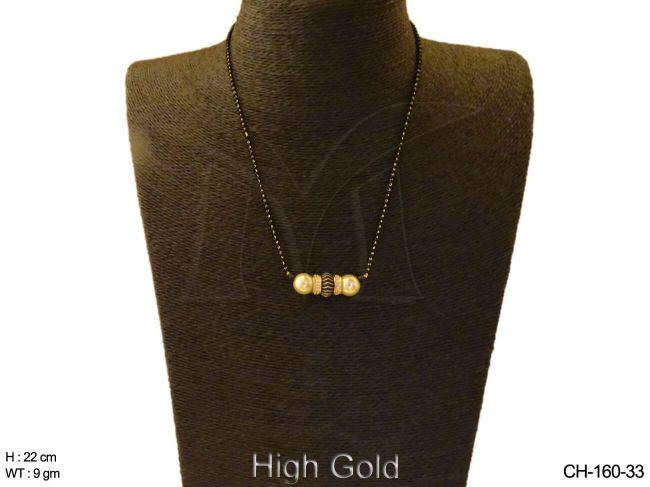
Chain, in Manek Ratna's catalogue, covers imitation jewellery neck chains and chain-style necklaces manufactured in Mumbai and supplied wholesale to retailers, boutiques, resellers and exporters. The range spans plain antique gold chains through to fully stone-set American diamond pieces, mangalsutra chains and layered pearl designs, covering everyday fashion wear as well as wedding and festive party wear.
What styles and finishes does the Chain category cover?
The category is built around finish and stone-work variation rather than a single design idea, since that is what a repeat trade buyer actually reorders against. Within the range you will typically find:
- Antique gold chains with an oxidised, temple-inspired or floral texture, sold plain or with a slot for a single hanging stone or pendant.
- White rhodium polish chains set with cubic zirconia or American diamond stones, used for party wear and bridal-adjacent occasions.
- High gold polish long chains, often in the 24 to 30 inch range, aimed at festive and celebration wear.
- Two-tone chains that combine gold and rhodium plating on the same piece for a layered-metal look.
- Mangalsutra-style chains strung with black glass mani beads, finished with a single stone, triple-stone, or antique pendant.
- Pearl chains, from a single-strand classic pearl drop necklace to multi-layer designs that combine pearls with cluster AD stone work.
Antique and rhodium finishes account for the bulk of repeat wholesale demand, since they cross regional and age-group preferences most easily. Pearl layering and colourful stone chains move faster in specific seasons and among younger fashion buyers, which is worth knowing before committing shelf space to them.
Chain length and link style vary as much as finish does. Shorter 16 to 18 inch chains sit close to the collarbone and work well layered with a separate pendant, while 24 to 30 inch chains sit lower and are usually sold as a finished long-chain piece rather than a base for a pendant. Link construction, whether a fine rolo link, a flatter curb link or a rounder box link, changes both how a chain drapes and how visible plating wear becomes over time.
What materials and plating go into these chains?
Every chain in this category starts on a brass or copper-alloy base, since these metals hold plating and stone-setting better than lighter alternatives at wholesale weight. What changes from style to style is the plating and stone-work applied over that base.
- Gold micron plating, applied in varying thickness; heavier micron plating holds its colour through more handling and wear before it needs re-polishing.
- White rhodium plating, which gives a platinum-like finish and resists yellowing in humid conditions better than untreated brass.
- Antique or oxidised plating, deliberately blackened in the recesses of a design so that scratches and daily wear show far less than on a bright polish.
- Cubic zirconia and American diamond stones, set either by glue-and-prong mounting or pave settings; prong-set stones generally survive transit and daily wear better than glue-only settings.
- Pearls, either shell-based or glass, strung or capped depending on the design.
- Black glass mani beads, used specifically on mangalsutra-style chains.
- Clasps in hook, lobster or S-hook styles, chosen according to how the chain will actually be worn and re-closed.
In practice, rhodium-plated pieces tend to outlast gold-plated ones in coastal and monsoon-heavy markets, because gold plating shows brassing at the edges sooner once humidity gets under the surface. Antique finish is the most forgiving option for retailers whose stock sits on open display for weeks, since surface marks blend into the oxidised texture rather than standing out.
Who buys imitation chains at wholesale, and when?
The end customer buying these chains at retail is typically a value-conscious fashion shopper rather than a fine jewellery buyer, which is exactly why finish consistency and stone security matter more here than metal purity. Demand comes from several distinct buying moments rather than one steady curve.
- Wedding season, roughly October to February across most of India, drives demand for mangalsutra chains, high gold polish long chains and heavier AD-stone pieces bought as part of trousseau or gifting sets.
- Festive periods such as Navratri, Durga Puja and Diwali drive short, sharp demand spikes for party wear chains in rhodium and antique finishes.
- Daily-wear and gifting demand runs year-round for lighter antique and simple gold-polish chains, which is the steadiest part of the category.
- Export and non-Indian retail buyers lean toward pearl and minimal chain designs that read as fashion jewellery rather than ethnic wear.
Demand also varies by region within India. Markets with strong bridal retail, such as parts of Gujarat, Rajasthan and South India, lean more heavily on mangalsutra and heavy festive chains, while metro fashion retail and online resellers lean toward lighter antique, rhodium and pearl designs that photograph well for online listings. Retailers serving a wedding-heavy catchment should weight buying toward mangalsutra and long festive chains; those serving a younger, daily-fashion customer usually do better weighting toward lighter antique and rhodium pieces that turn over faster.
How should you build your chain assortment?
Range breadth is the point of this category, but breadth without a clear depth strategy just ties up shelf space in slow stock. A practical starting split looks like this:
- Stock antique gold and white rhodium party wear chains deep, since these two finishes carry the widest customer appeal across age groups and occasions.
- Stock mangalsutra chains deep if your customer base includes a wedding or married-women's daily-wear segment, and keep the range shallow if it does not.
- Keep layered pearl necklaces and cluster AD designs at moderate depth and treat them as a rotating range, since fashion layering trends shift faster than plain chain demand.
- Stock high gold polish long chains ahead of festive and wedding season rather than reactively, since customers ask for these by look rather than by name.
- Reorder antique and rhodium finishes on a steady rhythm year-round, and treat pearl and colour-stone lines as seasonal top-ups rather than permanent stock.
The fastest sell-through in this category is consistently in antique and rhodium party wear chains at accessible weight and finish, followed by mangalsutra chains in wedding-driven markets. Layered pearl and colourful stone pieces sell well but in shorter windows, so they reward buyers who restock little and often rather than committing to one large seasonal buy. Chains also photograph and display differently by finish: antique and oxidised pieces suit warm-toned or wooden display props, while rhodium and pearl chains show better against contrasting dark backgrounds, which is worth factoring in when deciding what to push through an online catalogue versus in-store browsing.
What should you inspect before committing to a chain supplier?
Finish and stone quality are the two places wholesale chain quality most commonly breaks down, and both are checkable on arrival rather than something a buyer has to take on trust.
- Plating thickness and evenness: check the full length of a sample chain, not just the clasp end, since plating is sometimes thinner where a chain is gripped during finishing.
- Stone setting security: gently flex a stone-set section; glue-set stones that move or feel loose under light pressure will likely come out in transit or on a customer's neck.
- Colour consistency across a batch: rhodium plating in particular can vary between a cooler blue-white and a warmer white from batch to batch, which matters when selling matched sets.
- Clasp strength: check that hooks and lobster clasps close firmly and do not spring open under normal handling.
- Weight consistency: chains from the same design should feel the same piece to piece; inconsistent weight usually signals inconsistent base metal thickness.
- Packaging: chains should arrive tangle-free and individually protected, since a chain that arrives knotted or scratched changes how it photographs and sells at retail.
Where possible, inspect a small sample from more than one carton in a shipment rather than only the top layer, since finishing consistency can vary slightly between production batches even within the same order. A short physical check against these points on a sample order tells a buyer more about a supplier's real production consistency than any description can.
What distinguishes Manek Ratna's chain manufacturing?
Manek Ratna manufactures and finishes this chain range from its Mumbai base, keeping plating, stone-setting and quality checks under one roof rather than spread across subcontracted stages. That matters for a category like Chain, where finish consistency between one piece and the next is the main thing a repeat wholesale buyer is actually paying for.
The catalogue is built to cover breadth deliberately: antique, rhodium, high gold polish, two-tone, mangalsutra and pearl chains all sit within the same category so that a retailer can build a full counter display from one supplier rather than sourcing each finish separately. Stock is produced to be sold as sets or as open assortments, which suits both a boutique buying a small curated selection and an exporter buying a wider spread across finishes.
How does Chain fit alongside other categories in the catalogue?
Chain sits close to Mangalsutra, Necklace Sets and Pendant categories in the wider catalogue, and the boundary between them is practical rather than strict. A plain antique chain sold without a pendant slot falls under Chain; the same base design sold with a temple pendant already attached typically moves into the Pendant or Necklace Sets category instead. Buyers building a counter that covers both chains and pendants separately can use Chain to stock the base pieces and cross-sell pendant attachments alongside them, which increases basket size without requiring a wider core range.
Frequently asked questions about wholesale imitation chains
What is the difference between antique and rhodium-polish chains?
Antique chains carry a deliberately oxidised, blackened finish in the recessed parts of the design, giving an aged, textured look that hides surface marks well. Rhodium-polish chains carry a bright white plating over the base metal for a platinum-like shine, usually paired with cubic zirconia or American diamond stones. Antique suits ethnic and traditional buyers; rhodium suits party wear and brighter, cooler-toned occasions.
How long does the gold plating on these chains last with normal wear?
Plating life depends on micron thickness and handling more than on any single design, so it varies piece to piece rather than following a fixed timeline. Heavier micron gold plating holds its colour through more daily wear and occasional moisture exposure before it needs re-polishing than thin plating does. Keeping chains away from direct perfume or water contact extends the finish noticeably.
Are imitation chains safe for everyday skin contact?
Most wearers tolerate brass or copper-alloy base metal without issue, though a small proportion of people with nickel sensitivity may react to any non-precious metal jewellery, imitation or otherwise. Retailers selling for daily wear should present these as fashion pieces rather than hypoallergenic jewellery, and suggest customers with known metal sensitivities try a piece briefly before extended wear.
Which chain styles sell fastest during wedding and festive season?
High gold polish long chains, mangalsutra-style chains and fully stone-set American diamond chains see the sharpest demand spikes around the October to February wedding season and around Diwali and Navratri. Lighter antique and rhodium chains sell steadily year-round but do not spike the same way. Stocking festive-weight pieces ahead of these windows, rather than reactively, captures more of that demand.
Can chain styles and finishes be mixed within a single wholesale order?
Yes, the range is built so antique, rhodium, high gold polish, mangalsutra and pearl chains can be combined within one order to suit a retailer's display or customer base. Exact order structure and current terms are set at the time of ordering, so confirm those directly with the Manek Ratna sales team before finalising a wholesale order.
Do you supply chain designs suited to export markets outside India?
Yes, pearl chains, minimal antique designs and two-tone chains generally read as fashion jewellery rather than specifically Indian ethnic wear, which makes them a natural starting point for export or non-Indian retail buyers. Mangalsutra and heavily stone-set festive chains sell primarily within Indian and Indian-diaspora markets, so export ranges tend to lead with the more fashion-forward end of the catalogue.
What is the minimum order quantity for wholesale chain orders?
Minimum order quantities are not fixed figures published on this page, since they are reviewed and can change. Please contact the Manek Ratna sales team directly for current minimum order quantities, order structure and terms before placing a wholesale chain order.